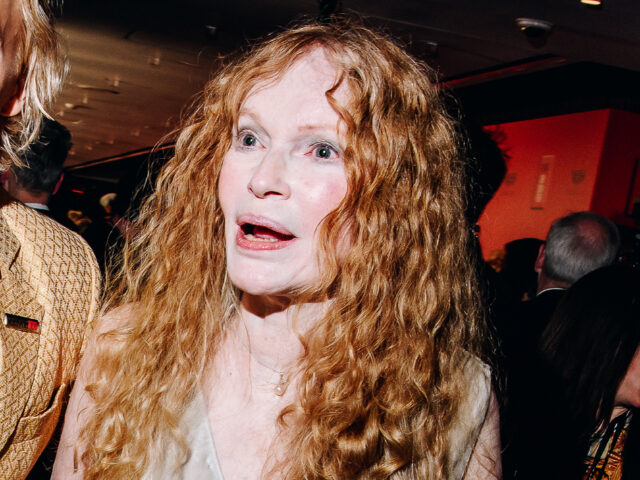
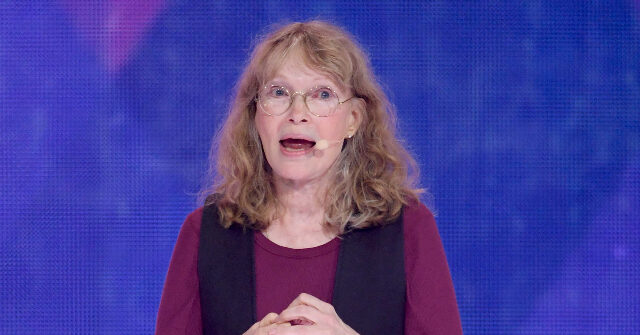
When actress Mia Farrow claimed that former President Donald Trump may have staged the 2017 Congressional Baseball Game shooting to increase his approval ratings, the internet erupted. Her comments, posted on social media, didn’t just ignite outrage—they exposed the deep fractures in public trust, celebrity influence, and how trauma is interpreted in the hyper-politicized age of digital media.
Farrow’s suggestion wasn’t a detailed theory. It was a speculative tweet, brief and incendiary: “Beginning to wonder if the WHCD shooting wasn’t staged to boost Trump’s ratings. Too convenient.” Within hours, it was shared, dissected, and condemned. But rather than fading, the idea lingered—at least in certain corners of online discourse—raising serious questions about how quickly conspiracy narratives take root, especially when backed by cultural figures.
This article examines the origins of Farrow’s claim, the factual record of the shooting, the psychology behind such theories, and the broader implications for public discourse when celebrities float dangerous insinuations.
The WHCD Shooting: What Actually Happened
On June 14, 2017, a gunman opened fire on a group of Republican lawmakers and staff practicing for the annual Congressional Baseball Game for Charity at a baseball field in Alexandria, Virginia. The shooter, James Hodgkinson, was killed by police after a 10-minute shootout.
Five people were injured, including House Majority Whip Steve Scalise, who was critically wounded with a gunshot to the hip. His survival was described as miraculous by medical staff.
The attack was bipartisan in its response. Democrats and Republicans united in condemnation. The game went on as a symbol of resilience. First Lady Melania Trump visited Scalise in the hospital. President Trump addressed the nation from the White House lawn, calling for unity.
There was no credible evidence of foreknowledge by the White House, no security lapses suggesting complicity, and no motive linking Trump or his staff to the shooter. Hodgkinson, an Illinois-based self-employed contractor, had a history of anti-Republican posts online and was a volunteer for Bernie Sanders’ 2016 campaign.
The FBI investigation concluded it was a politically motivated lone-actor attack.
Mia Farrow’s Claim: Context and Fallout
Mia Farrow, known for her humanitarian work and role in Rosemary’s Baby, has long been politically active. She’s a vocal critic of Trump and has used her social media platforms to challenge his policies and character.
Her tweet came days after the shooting, amid a wave of positive media coverage for Trump’s unifying response. Approval ratings did tick upward temporarily—common after national incidents, regardless of administration.
Farrow’s suggestion implied manipulation: that the shooting was either orchestrated or permitted to happen to manufacture a “rally around the flag” moment.
The backlash was swift. Critics from both parties called the claim reckless and offensive. Scalise’s office labeled it “disgusting.” Even some of Farrow’s allies distanced themselves. Within 24 hours, she deleted the tweet and issued an apology: “I deeply regret my tweet. It was a terrible error in judgment. The victims and their families have my heartfelt sympathy.”
But the damage was done. The tweet had already been screenshotted, amplified, and weaponized across political echo chambers.
Why This Theory Gained Traction (Briefly)
Conspiracy theories thrive in moments of emotional volatility. The WHCD shooting was traumatic, sudden, and visually dramatic—lawmakers diving for cover, bloodied on live TV. That shock creates cognitive dissonance. People seek patterns, even where none exist.
Farrow’s claim, while lacking evidence, tapped into three real phenomena:
- Approval Bump After Crises: Presidents often see temporary approval spikes after national tragedies or attacks. Trump’s went from ~39% to ~43% in some polls post-shooting. Not unprecedented—Bush saw double-digit jumps after 9/11; Obama after the Bin Laden raid.
- Trump’s History of Media Manipulation: Trump’s mastery of media narratives is well-documented. He thrives in chaos, often using crises to shift attention from scandals. Farrow’s theory, however flawed, stemmed from observable behavior—just misapplied.
- Celebrities as Political Commentators: Figures like Farrow wield influence far beyond policy expertise. Their statements are treated as newsworthy, regardless of rigor. A single tweet can set off a media firestorm.
Still, the staging of a violent attack involving real injuries and near-death is a leap far beyond standard political cynicism. It borders on disinformation.
The Danger of “Soft” Conspiracy Theories
Farrow didn’t present documents, sources, or a timeline. She offered a “wondering”—a seemingly casual doubt. But in the digital age, that’s enough.
These “soft” theories—phrased as questions or musings—avoid accountability while spreading dangerous ideas. They exploit plausible deniability: “I didn’t say it was true, I just asked.”
Psychologists call this illusory truth effect: repeated exposure to a claim increases belief in it, even if initially dismissed. When a trusted figure floats a theory, it gains a veneer of legitimacy.
Consider the real-world impact:
- Survivors like Scalise relive trauma seeing their suffering questioned.
- Public trust in institutions erodes further.
- Genuine threats are harder to identify when everything is suspect.
Farrow’s tweet, whether intended seriously or as hyperbolic outrage, contributed to a culture where political enemies are seen not just as wrong, but as capable of staging mass violence for gain.
That’s not skepticism. It’s radicalization by suggestion.
Comparing Farrow’s Claim to Other Political Conspiracy Theories
| Theory | Origin | Credibility | Lasting Impact |
|---|---|---|---|
| Farrow’s WHCD staging claim | Celebrity social media | None | Short-term outrage, apology |
| Seth Rich conspiracy | Fox News, right-wing blogs | Debunked | Years of harassment |
| Pizzagate | 4chan, Reddit | False | Armed incident at Comet Ping Pong |
| Obama birth certificate | Trump-led campaign | False | Long-term legitimacy attacks |
Farrow’s claim ranks low in reach but notable in source. Unlike anonymous online posters, she’s a real public figure with decades of cultural capital. That gives such theories momentary oxygen they wouldn’t otherwise get.
Still, unlike Pizzagate or Seth Rich, Farrow’s theory didn’t spawn harassment campaigns or real-world violence. It was widely rejected across the spectrum—indicating some red lines still exist.
How the Media Handled the Claim
Major outlets like CNN, The New York Times, and The Washington Post reported on Farrow’s tweet—but with clear context. Most labeled it a “conspiracy theory” and included her subsequent apology.
This is a shift from earlier eras, where sensational claims might be repeated without pushback. Today, responsible outlets often fact-check in real time.
However, conservative media amplified the tweet differently. Fox News personalities used it to attack “Hollywood elitism” and liberal hypocrisy. Some framed it as proof that the left views Trump as an existential villain—capable of anything.
In both cases, the focus shifted from the victims to the politics of the accusation. The shooter, the injured, the first responders—all faded into the background.
The Role of Approval Ratings in Crisis Moments
Did Trump benefit politically from the shooting?
Yes—but not in the way Farrow implied.
Presidential approval often rises temporarily after national crises. Political scientists call this the “rally ‘round the flag” effect. It’s been documented since the Korean War.
Triggers include:
- Foreign attacks (9/11, Pearl Harbor)
- Domestic terrorism (Oklahoma City)
- Major disasters (Hurricane Katrina, though Bush’s ratings fell due to poor response)
The effect typically lasts 3–6 months. It’s driven by patriotism, media unity, and a desire for stable leadership during uncertainty.
Trump’s post-shooting bump fit this model perfectly. He appeared empathetic, bipartisan, and presidential during coverage. That contrasted with his usual combative tone—making the moment more impactful.
But correlation isn’t causation. There’s no evidence he wanted or planned the attack. In fact, such an event would carry immense risk—potential death of allies, political backlash if mishandled, criminal liability.
No president benefits long-term from actual violence on U.S. soil.
When Skepticism Crosses the Line
Healthy skepticism is essential in a democracy. Questioning narratives, demanding evidence, challenging power—it’s the bedrock of accountability.
But skepticism becomes dangerous when it morphs into default disbelief—when any official account is assumed false, and leaders are presumed guilty until proven innocent.
Farrow’s tweet exemplifies this shift. Instead of asking, “Did the administration respond appropriately?” she implied, “Did they cause it?”
That’s not scrutiny. It’s inversion: assuming malice where incompetence or randomness might explain events.
The internet rewards such takes. Outrage drives engagement. Nuance loses to provocation.
But the cost is real. When we normalize questioning whether a near-fatal shooting of a sitting congressman was “convenient,” we erode shared reality.
The Bigger Problem: Celebrity Influence Without Accountability
Mia Farrow has 350,000+ Twitter followers. Her words reach far beyond a private conversation. When she deletes a tweet and apologizes, the algorithm doesn’t erase it. Screenshots live on.
Celebrities aren’t journalists. They’re not intelligence analysts. Yet their opinions are treated as commentary, not gossip.
There’s no editorial board vetting their claims. No fact-checking. No obligation to proportionality.
And when they cross the line, consequences are minimal. Temporary backlash, maybe lost sponsorships. But no legal or institutional penalty.
Compare that to a reporter publishing false claims—lawsuits, retractions, job loss. The imbalance is stark.
Until platforms and audiences demand higher standards from influential non-experts, we’ll keep seeing moments like this: a trauma refracted through speculation, harming victims twice.
A Path Forward: Responsibility in Public Discourse
We can’t stop people from speculating. But we can choose what to amplify.
Media outlets should report celebrity controversies with context—not just the quote, but its implications and the facts that contradict it.
Platforms could flag or limit the reach of unsubstantiated claims from high-profile users—similar to how political misinformation is sometimes labeled.
And audiences must practice source triage: asking not just “Is this possible?” but “Who says so, and what’s their basis?”
Most importantly, we should center victims, not theories.
Steve Scalise spent months recovering. Staffers still have PTSD. The shooter’s family grieves too.
Politics will continue. But not every moment needs to be politicized.
If you see a claim this extreme, pause. Check the facts. Ask if it serves truth—or just outrage. And remember: in the race to be first, accuracy rarely wins. But it’s the only finish line that matters.
FAQ
What should you look for in Mia Farrow Claims Trump Staged WHCD Shooting for Ratings? Focus on relevance, practical value, and how well the solution matches real user intent.
Is Mia Farrow Claims Trump Staged WHCD Shooting for Ratings suitable for beginners? That depends on the workflow, but a clear step-by-step approach usually makes it easier to start.
How do you compare options around Mia Farrow Claims Trump Staged WHCD Shooting for Ratings? Compare features, trust signals, limitations, pricing, and ease of implementation.
What mistakes should you avoid? Avoid generic choices, weak validation, and decisions based only on marketing claims.
What is the next best step? Shortlist the most relevant options, validate them quickly, and refine from real-world results.